Gin Rummy Classic
- 4.6
- Rating
- 5.00M
- Installs
- Free
- Price
 Analysis by App-foxy
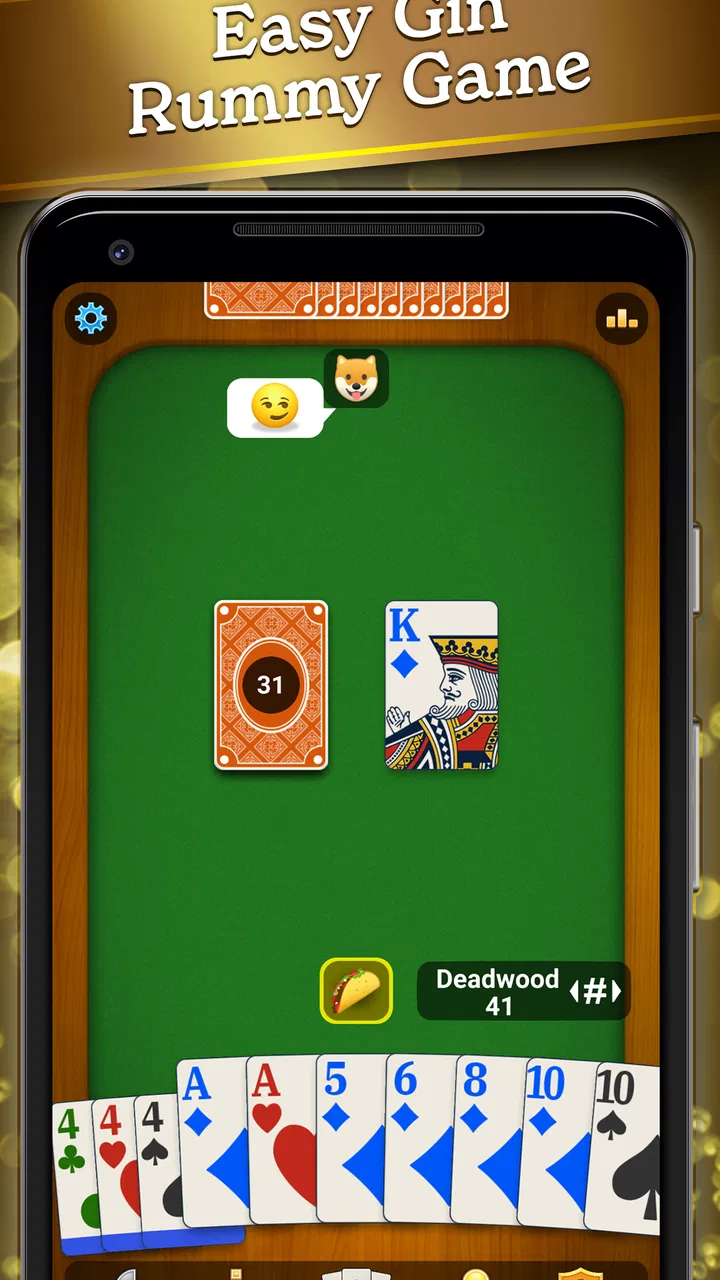
I picked up Gin Rummy Classic expecting a straightforward card game, and that is exactly what it delivers. It focuses on the familiar Gin Rummy rules rather than surrounding the match with an oversized collection of unrelated activities. That simplicity is its main appeal: I can open it for a quick hand, think through my discards, and stop when I have had enough without learning a complicated interface first.
At the same time, the clean presentation does not make every match easy. Gin Rummy rewards memory, patience, and the ability to read what another player may be collecting. I found that the most satisfying moments came from holding back a useful card, changing plans after an opponent’s discard, and deciding whether to knock early or keep searching for a better hand. For anyone who enjoys traditional card games but wants something convenient on a phone, this is an easy game to understand and surprisingly difficult to master.
How the first matches establish a useful rhythm
The early goal is refreshingly clear: build combinations, reduce unmatched cards, and finish the hand at the right moment. I never felt pushed to decode a large progression map before playing properly. The opening matches are about learning the rhythm of drawing, discarding, watching the visible cards, and judging when a hand is strong enough to end.
You May Also Like

 Blood Strike: 2.5 Anniversary
Blood Strike’s Loadouts Turn Every Drop Into a Tactical Gamble
A close look at Blood Strike’s custom loadouts: how fast access to signature weapons reshapes its battle royale rhythm, rewards preparation, and narrows the gap between fights.

 Pandora - Music & Podcasts
Pandora’s Music Is Easy to Start, but Harder to Recover
Pandora’s strength is its low-effort path from a seed to a station. Its weak spot is how much confidence it asks you to place in connection, setup, and quiet recovery.

 8 Ball Pool
 Is Built on Rivalries, Rematches, and Routine
A close look at the rivalries, rematches, shared routines, and unanswered safety questions that turn a quick pool match into a persistent mobile community.

 Samsung Music
’s Quiet Strength Is Playing What You Already Own
Its reach comes less from spectacle than from dependable access to a personal library. That simplicity is both the app’s strongest retention engine and its ceiling.

 AccuWeather: Weather Radar
AccuWeather Review: A Quick, Clear Forecast for Everyday Decisions
For everyday plans, the best forecast is the one you can understand quickly. AccuWeather makes rain timing, radar, and local conditions easy to act on, with a few trade-offs.

 Hill Climb Racing
Why Hill Climb Racing Still Turns Crashes Into One More Run
A tiny car, a bumpy hill and one more upgrade: Hill Climb Racing keeps resurfacing because its simple chaos makes every near-miss feel personal.
More From Our News Desk



That clarity matters on a small screen. A complicated card game can become tiring when every action is hidden behind menus, but this one works best when I treat each hand as a compact decision problem. I look at the cards I already have, identify possible runs or groups, and then decide which cards are worth keeping while the opponent reveals clues through their discards.
One useful habit is to avoid committing too quickly to the first combination I see. A pair may look promising, but keeping two cards that are unlikely to connect can leave the hand heavy with deadwood. I found it more effective to track which ranks are becoming less realistic as the hand develops. This makes the game feel less like luck alone and more like a conversation conducted through cards.
The early objective also gives the game a natural short-session structure. I can play a hand while waiting for an appointment, complete a longer session when I want to concentrate, or return later without needing to remember a complicated storyline. That flexibility is more valuable here than decorative progression would be, because the core pleasure comes from improving my decisions rather than collecting unrelated rewards.
Small decisions create the real learning curve
New players should pay attention to the opponent’s choices instead of focusing only on their own hand. A discarded card can suggest that a suit or rank is no longer useful to the other side, but it can also be bait. I try not to assume that every discarded card is safe to take. Sometimes the better move is to choose a less exciting card simply because it gives away less information.
Another practical tip is to remember the cards that have already appeared. Perfect memory is not necessary, but recalling a few important discards can change the final turns. If several cards that would complete a run have already been seen, continuing to wait for that combination becomes a poor trade-off. This is where the game quietly teaches probability and restraint without presenting itself as a lesson.
I also learned to separate a good-looking hand from a useful hand. A hand with several possibilities can feel exciting, yet it may contain too many unconnected cards. A less ambitious arrangement with lower deadwood can be safer when the opponent appears close to ending. The best choice depends on the situation, which keeps the early goals from becoming repetitive instructions.
Progress feels more personal than decorative
Gin Rummy Classic does not need a complicated unlock ladder to give me a reason to continue. The clearest progress signal is my own play: I begin to recognize when I am holding a risky card, when I am revealing too much through a discard, and when I am chasing a combination that has already become unlikely. Those improvements are subtle, but they are more meaningful than simply opening another cosmetic screen.
The game’s established audience supports that focused approach. Developed by MobilityWare, it has an average rating of 4.6 from around 83 thousand ratings, with roughly 4.2 thousand written reviews and over 5 million installs. Those figures suggest that the familiar format and accessible presentation have reached a substantial audience, although popularity should not be mistaken for a guarantee that every player will enjoy the deliberate pace of Gin Rummy.
For me, progress comes in stages. At first I was mainly trying to form combinations. Later I started considering what my opponent might infer from each discard. Eventually, I became more comfortable ending a hand without waiting for an ideal result. That last change is important: improvement is not always about making a spectacular hand; often it is about recognizing when a modest advantage is worth taking.
Players looking for visible unlocks should adjust their expectations. This is not the kind of card game where I would expect a constant stream of new characters, locations, or dramatic rewards to carry the session. Its motivation is the refinement of play. If that sounds satisfying, the uncomplicated structure becomes a strength. If you need frequent external prizes to maintain interest, the experience may feel too restrained.
Challenge rises through judgment rather than spectacle
The difficulty curve works because the basic rules are easy to grasp while the decisions become harder as I understand their consequences. Early hands can be played by matching obvious cards, but stronger play requires balancing several concerns at once: completing combinations, limiting deadwood, concealing intentions, and ending before the opponent gains the advantage.
There is no need for a dramatic difficulty gimmick to make a hand tense. The pressure comes from incomplete information. I can see my own cards and the public discards, but I still have to estimate what the other side is building. That uncertainty makes a seemingly harmless draw feel important. A card that improves my hand may also reveal exactly what I am trying to do.
One of the most useful ways to approach the challenge is to set a decision rule before playing. For example, I might decide that I will stop chasing a run after too many relevant cards have appeared elsewhere, or that I will favor lower deadwood when the opponent’s discards suggest a nearly complete hand. These personal rules prevent me from making emotional decisions after an unlucky draw.
The game is also a good fit for players who enjoy replaying the same rules with better judgment. I do not need a new environment to feel a difference between one session and the next. A hand that once seemed unlucky may later look like a hand I mishandled. That distinction gives the challenge some depth, because it encourages analysis instead of simply blaming the deal.
Still, the deliberate nature of Gin Rummy is not universally appealing. Anyone wanting rapid action, elaborate animations, or a campaign with a strong narrative should probably choose another type of card game. This experience asks me to think in small increments, and a single turn can matter more than a flashy presentation.
Offline play changes when and why I return
The ability to play offline is one of the most practical parts of the package. I can use it in places where a connection is unreliable, such as during travel or in a waiting room, without turning the game into a frustrating loading exercise. For a traditional card game, that makes sense: the core activity does not require a constantly changing online world.
Offline access also changes the pressure around a session. I do not have to reserve the game for a time when my connection is stable, and I can focus on the hand rather than interruptions from a network problem. That makes it particularly suitable for people who want a dependable casual game rather than a social platform that demands regular online participation.
There is a trade-off, though. A self-contained card game can become part of a routine, but it may not provide enough variety for someone who needs a fresh challenge every time they open an app. I found the best use was to treat it as a focused mental break: a few hands when I wanted concentration, not an endless replacement for every other form of entertainment.
The content rating is Teen, so parents and younger players should take that label into account before installing it for a child. The game is free to download, while in-app purchases range from $4.99 to $24.99 per item. I would approach those purchases carefully and decide in advance whether the free experience already meets my needs. For a simple card game, the important question is not how much can be added, but whether I am comfortable spending money on optional extras.
What keeps the pacing engaging, and what can weaken it
The pacing is strongest when I give each hand a clear purpose. I might concentrate on reducing deadwood, practice reading discards, or test whether I am ending hands too late. This turns a series of similar rounds into deliberate practice. Without that intention, the repeated structure can feel flat, especially during a run of ordinary hands.
That is the main retention pressure here: the desire to make fewer mistakes and recognize patterns sooner. It is a quiet form of motivation rather than a loud reward cycle. I return because I can see where my judgment failed, and because the next hand gives me another chance to apply what I learned.
My advice is to stop after a frustrating streak instead of forcing one more hand indefinitely. Card games can encourage stubborn play, especially when I believe I am due for a better result. A short break helps separate genuine improvement from simply wanting to reverse a disappointing outcome. The game works better as a controlled pastime than as something I play until every hand feels like a test of patience.
Another helpful workflow is to use short sessions for experimentation and longer sessions for consistency. In a quick session, I can focus on one idea, such as discarding cards that reveal the least. In a longer session, I can see whether that approach actually improves my decisions across different hands. This makes the familiar rules feel more purposeful without pretending that every round will be equally memorable.
Compared with solitaire, this game demands more attention to another player’s behavior. Solitaire is often better when I want a solitary puzzle with a familiar layout and less need to interpret an opponent. Compared with a broad collection of card games, Gin Rummy Classic is narrower but more coherent. It does one traditional game instead of spreading attention across many formats, which is useful if Gin Rummy is specifically what I want.
It is also different from highly social or competitive card apps that depend on live interaction. Here, I value the ability to play offline and at my own pace, but players who want conversation, matchmaking, or a strong sense of community may find the experience too self-contained. The right choice depends on whether the card decisions themselves are the main attraction.
Device fit, access, and everyday practicality
The game supports Android devices running version 8.0 or later, and its current version is 2.1.0.2401. That makes the compatibility requirement worth checking before installation, particularly on an older phone or tablet. Once installed, the appeal is straightforward: the game is free to start, easy to understand, and suitable for a short break without requiring a large commitment of time.
A realistic scenario for me would be a delayed train. I can play a few hands offline, put the phone away when the platform changes, and return later without needing to organize a multiplayer session. Another use is an evening wind-down when I want something more mentally engaging than passive scrolling but less demanding than a full strategy game.
I would skip it if my priority is a constantly changing collection of modes, a strong narrative, or fast reflex-based action. I would also hesitate if I dislike replaying a familiar ruleset, because the game’s long-term appeal depends on finding depth in repeated decisions. On the other hand, people who already enjoy physical Gin Rummy may appreciate having a convenient version available when a table, deck, or opponent is not nearby.
For new players, I recommend learning the basic flow first and resisting the urge to optimize every turn immediately. Once the actions feel natural, start watching the opponent’s discards and your own deadwood. That order makes the game less intimidating and helps the more advanced decisions emerge naturally rather than turning the first session into mental bookkeeping.
My verdict on the progression and long-term value
Gin Rummy Classic sustains play through gradual improvement rather than a heavy unlock structure. The early goals are understandable, the progress signals come from better judgment, and the difficulty grows as I learn to interpret incomplete information. Its offline capability gives the game an unusually practical role, especially for short sessions away from a reliable connection.
My main reservation is that the same focus can feel limited. There is not much reason to install it if I want constant novelty or a broad set of card formats. The pacing is calm, and the satisfaction arrives through decisions that become sharper over time. That is rewarding for a patient player but less convincing for someone who needs frequent spectacle or external rewards.
Overall, I recommend it to anyone who wants a focused Gin Rummy card game that can fit into everyday gaps. I would describe it to a friend as a dependable practice table: simple enough to enter quickly, deep enough to expose careless habits, and flexible enough to play without a connection. The real progression is learning when to wait, when to discard, and when to end the hand before a good position turns bad.
FAQs for Gin Rummy Classic
01What is Gin Rummy Classic?
Gin Rummy Classic is a digital adaptation of the traditional card game Gin Rummy, available on both Android and iOS platforms. It offers players a sleek and user-friendly interface, allowing them to enjoy a smooth and engaging card game experience, either solo or with friends online.
02Is Gin Rummy Classic free to download and play?
Yes, Gin Rummy Classic is free to download and play. However, it may offer in-app purchases for additional features, such as removing ads or acquiring special card designs. These purchases are optional and not necessary to enjoy the core gameplay.
03Does Gin Rummy Classic require an internet connection?
Gin Rummy Classic can be played offline, allowing you to enjoy solo matches against AI opponents without the need for an internet connection. However, to play multiplayer games with friends or access leaderboards, an internet connection is required.
04Can I play Gin Rummy Classic with friends?
Yes, Gin Rummy Classic offers a multiplayer mode where you can challenge your friends in real-time matches. You can either invite friends directly or join random online games to test your skills against other players globally, adding a social element to the game.
05What are the main features of Gin Rummy Classic?
Gin Rummy Classic features a user-friendly interface, customizable card designs, and multiple game modes, including single-player and multiplayer. The app also offers detailed statistics, leaderboards to track your progress, and various difficulty levels to cater to both beginners and experienced players.
Pros
- Simple
- user-friendly interface.
- Smooth and responsive gameplay.
- Offline mode available.
- Customizable card decks.
- Quick matchmaking system.
Cons
- Contains in-app ads.
- Limited multiplayer options.
- No chat feature during games.
- Occasional app crashes.
- Requires internet for updates.

Gin Rummy Classic
Gallery